
China Top 10 Types of Glasses Cases for Global Buyers?

Time:2026-10-27 Author:Aria
0%

Global buyers now expect more than basic protection from a Case Of Glasses. They want reliable quality, attractive design, practical storage, and responsible materials. A strong case should survive shipping, daily handling, and repeated opening. It should also match the eyewear inside.

According to eyewear packaging consultant Luca Bianchi, “A glasses case should protect the product while expressing the brand’s everyday values.” This view reflects a common purchasing reality. A hard EVA case may suit active users. A slim metal case can support premium collections. A soft microfiber pouch offers lightness and lower shipping volume. Wooden cases create a warmer presentation. Recycled plastic cases may support sustainability goals, when their material claims are properly verified.

This guide examines ten widely used Case Of Glasses types for international buyers. It compares structure, material, protection, customization, cost, and suitable sales channels. Details matter. A zipper should move smoothly. Hinges should resist loosening. Interior lining should not scratch lenses. Odor matters too.

Not every attractive case performs well. Some elegant designs waste valuable warehouse space. Others look durable but crack in cold conditions. These limitations deserve attention. Testing samples before large orders remains essential. Supplier communication also needs precision, especially for logo placement, color matching, packaging dimensions, and delivery terms.

The ranking is useful, but not absolute. Buyer priorities differ across markets. A children’s optical store needs different protection than a luxury eyewear brand. This article offers a practical starting point, while leaving room for careful testing and better questions.
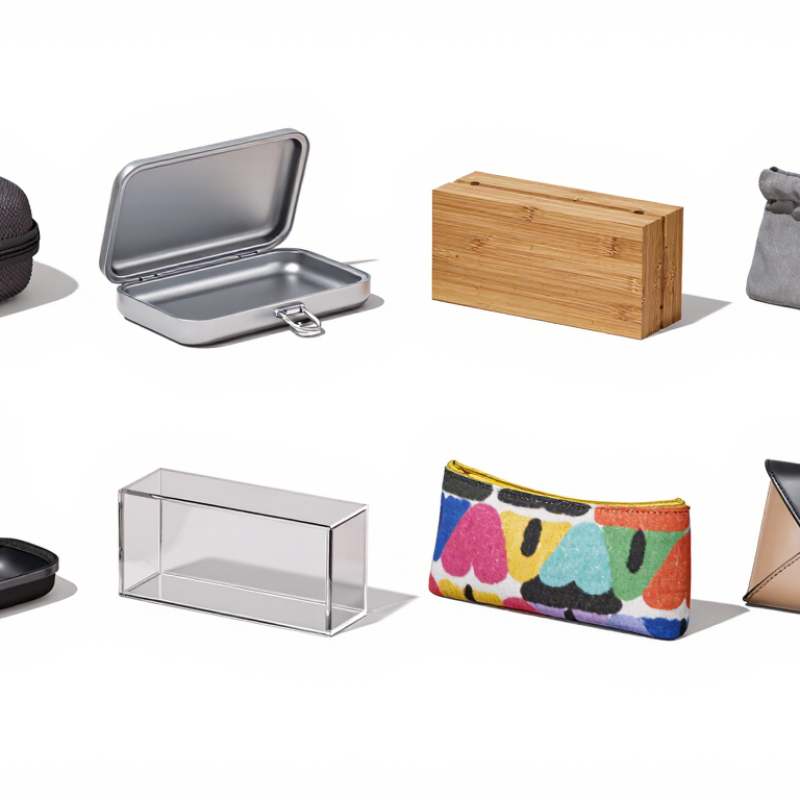
China Top 10 Types of Glasses Cases for Global Buyers?

What Defines a Glasses Case and Its Core Functions

A glasses case is a protective container designed to hold, cover, and organize eyewear when it is not being worn. Its core function is simple: reduce scratches, pressure, dust, and accidental bending. A dependable case should fit the frame without forcing the hinges or lenses against hard surfaces. It should also open smoothly and close securely during daily travel.

For global buyers, practical evaluation matters more than appearance alone. A rigid case usually offers stronger impact resistance, while a soft pouch saves space and suits lightweight frames. Materials should resist peeling, moisture, and unpleasant odors. Interior lining needs a smooth, non-abrasive surface.

Small details matter. A weak hinge can undermine an otherwise excellent design. I have seen attractive cases fail because their closures loosened after repeated use. That assumption needs testing.

Manufacturers and buyers can assess dimensions, seam strength, hinge cycles, lining quality, and surface durability before placing large orders. A case that fits several frame shapes may simplify inventory, but excessive space can let glasses move inside. Compact designs are convenient, yet they may not protect oversized frames. There is no perfect structure. The right choice depends on frame size, carrying habits, storage conditions, and target price. Clear inspection records and sample testing make quality decisions more reliable.

The 10 Main Types of Glasses Cases for Global Buyers

The 10 Main Types of Glasses Cases for Global Buyers

Global buyers can choose from ten practical case types: hard-shell, soft pouch, EVA, leather, metal, wooden, foldable, magnetic, microfiber drawstring, and travel organizer cases. Hard-shell cases offer stronger impact protection, while microfiber pouches suit lightweight promotional programs. EVA models resist moisture and compression during shipping. Metal and wooden cases create a premium feel, but they usually add weight and packaging costs. Foldable cases save warehouse space, yet their hinges need careful testing.

Demand is supported by the wider eyewear market. Grand View Research valued this market at about USD 183 billion in 2022 and forecast an 8.4% annual growth rate through 2030. The World Health Organization reports that at least 2.2 billion people have near or distance vision impairment. These figures suggest sustained demand for protective accessories, although case demand differs by region and product channel. Buyers should compare hinge cycles, lining softness, odor, compression strength, and carton efficiency. A beautiful case can still fail after repeated opening.

Tips: Request samples from at least three suppliers. Test a case with actual frame dimensions, not only catalog measurements. Check drop performance, zipper alignment, colorfastness, and recycled-content claims. Ask for test reports when available. Materials described as “eco-friendly” may lack clear verification. That label deserves questions. Procurement teams should also review minimum order quantities, replacement rates, and shipping volume. Small improvements in folded depth can reduce pallet space, but that benefit may disappear when protective inserts are added.

Materials, Structures, and Protection Levels by Case Type

For global buyers, glasses cases should be compared by material, structure, and protection level. Hard-shell cases made from molded plastic or aluminum resist crushing and protect lenses inside crowded bags. Semi-hard EVA cases reduce weight while absorbing moderate impact. Soft fabric pouches use microfiber, polyester, or cotton. They prevent scratches, but offer little protection against pressure. Leather cases feel premium and age well, though moisture may cause stains. Wooden cases provide rigidity and a natural appearance, but their hinges need careful inspection.

Structure changes daily usability. Zippered cases close securely and suit travel. Snap-button cases open quickly, but the closure may loosen over time. Foldable cases save storage space, yet their corners can collapse under heavy items. Drawstring sleeves are simple and compact. They work best with sturdy frames, not delicate lenses. Protection levels should match the use environment. Urban users may need scratch resistance. Outdoor users need impact control, water resistance, and reliable stitching. A case with a soft lining, reinforced seams, and a tested hinge usually performs better than one with decorative details.

Tips: Check the internal clearance before ordering. A tight case can press against curved lenses. Test samples with a short drop, light compression, and repeated opening. Ask for material thickness and lining details. Do not trust appearance alone. Some attractive cases still fail at the corners. There is room for improvement in nearly every design.

How to Compare Glasses Cases for Different Buyer Needs

China Top 10 Types of Glasses Cases for Global Buyers

How to Compare Glasses Cases for Different Buyer Needs

Comparing glasses cases starts with the buyer’s daily use, not appearance. A hard EVA case suits commuters who need impact protection in bags. A slim microfiber pouch fits shoppers seeking low weight and low cost. Metal cases offer a firm structure, but they may add unwanted weight. Leather cases feel premium, while bamboo cases attract buyers who value natural materials.

Check measurable details before requesting samples. Compare inner length, hinge strength, lining softness, closure security, and empty-case weight. For children’s products, inspect sharp edges and test the clasp repeatedly. For optical retailers, review color consistency and logo placement. For promotional orders, confirm packaging dimensions because oversized cartons can raise shipping costs. A supplier with clear inspection records is usually more reliable than one offering only attractive photos.

Material performance also changes by climate. Moisture-resistant linings help in humid markets. Strong stitching matters when cases open hundreds of times. Recycled materials can support sustainability goals, but their texture may vary between batches. That point deserves honest discussion. Some buyers focus too heavily on price and later discover weak hinges or poor odor control. I have found sample testing useful, although one sample cannot represent every production batch. Ask for tolerance ranges, production photos, and a written quality standard before placing a large order.

Key Sourcing, Customization, and Quality Considerations

China Top 10 Types of Glasses Cases for Global Buyers

The global eyewear market reached USD 115.9 billion in 2022, according to Grand View Research. That growth increases demand for practical cases, including hard-shell, soft pouch, folding, leather-look, EVA, metal, wooden, bamboo, microfiber, and travel cases. Yet, buyers should not select by appearance alone. A case must match frame size, lens height, hinge position, and shipping conditions.

Sourcing starts with measurable specifications. Ask suppliers for material composition, wall thickness, closure strength, odor limits, and carton drop-test results. A hard EVA case may protect better than a thin plastic model, but it can raise freight volume. Zippers should open smoothly after repeated cycles. Metal hinges need corrosion checks. Interior microfiber should not shed fibers onto lenses. Customization can include logo placement, molded compartments, color matching, recycled materials, and retail-ready packaging. Small details matter.

Quality is often lost during scale-up. A pre-production sample may pass, while the tenth thousand unit shows uneven stitching or weak adhesive. Request a signed sample, an inspection plan, and batch-level photos. ISO 2859-1 sampling is useful for defining acceptable defect levels, although buyers sometimes apply it without understanding the risk. That is a weakness worth reviewing. Grand View Research also forecasts strong eyewear growth through 2030, so suppliers may prioritize speed over durability. Independent testing, traceable materials, and clear acceptance criteria help control that pressure. Protect the glasses first. Cost comes later.

FAQS

What is the main purpose of a glasses case?

It protects eyewear from scratches, dust, pressure, and accidental bending when the glasses are not being worn.

How should buyers choose between hard and soft cases?

Hard-shell cases provide stronger impact protection for daily bags and shipping.

Which materials are practical for glasses cases?

EVA resists moisture and compression.

What dimensions should a case have?

Measure frame width, lens height, hinge position, and overall depth.

Which case types save storage space?

Foldable cases reduce warehouse volume when collapsed.

What quality tests should buyers request?

Test seam strength, closure security, lining softness, surface durability, and odor.

How can buyers assess supplier samples?

Request samples from at least three suppliers.

What customization options are commonly available?

Buyers may customize colors, compartments, closure styles, logos, recycled materials, and retail packaging.

How can quality remain stable during mass production?

Approve a signed pre-production sample and define inspection criteria.

What should determine the final case choice?

Match the case with frame size, carrying habits, storage conditions, and target price.

Conclusion

A glasses case is more than a simple container: it protects eyewear from scratches, dust, impact, moisture, and deformation while making storage and transportation more convenient. For global buyers, the main types include hard-shell cases, soft pouches, semi-hard cases, folding cases, magnetic-closure cases, zipper cases, drawstring bags, slim pocket cases, multifunctional cases, and travel cases. Each design offers different levels of protection, portability, capacity, and visual appeal. A well-designed Case Of Glasses should match the intended eyewear style and usage environment.

When comparing options, buyers should evaluate materials such as metal, plastic, leather alternatives, fabric, and environmentally preferable materials, along with structure, lining, closure, size, and durability. Sourcing decisions should also consider production consistency, customization options, logo or pattern application, packaging, minimum order quantities, and quality inspection standards. Clear specifications and sample testing can help ensure that the selected case meets functional, aesthetic, and market-specific requirements.

Aria

Aria

Aria is a dedicated marketing professional with a deep passion for innovative strategies and a keen understanding of our company's product offerings. With a wealth of experience in the industry, Aria excels at crafting engaging content that highlights the unique features and benefits of our......