
Choosing a China-based Glasses Box manufacturer can give global buyers access to varied designs, materials, and production options. Yet a catalogue image rarely shows how a case feels in daily use. The hinge may loosen. The lining may mark delicate frames. Small details matter.
A dependable supplier should explain material choices, dimensions, surface finishes, customization limits, and quality checks in clear terms. Ask how samples are approved and whether production follows the agreed specifications. A neat sample is useful, but it cannot answer every question. Not always. Buyers should also confirm packaging details, lead times, and shipping arrangements before placing an order. These practical checks can reduce confusion, though they cannot remove every production risk.
This guide explores what international buyers can evaluate when comparing China’s glasses box manufacturers. It considers product construction, customization, communication, and order planning, rather than relying on broad promises. Photos can help, but written specifications and sample reviews give buyers more concrete points to compare. A supplier may suit one retailer and not another. That deserves honest attention. The right choice depends on the buyer’s market, price range, product needs, and tolerance for variation. By asking precise questions and recording agreed details, buyers can make a more informed decision and build a steadier sourcing relationship.
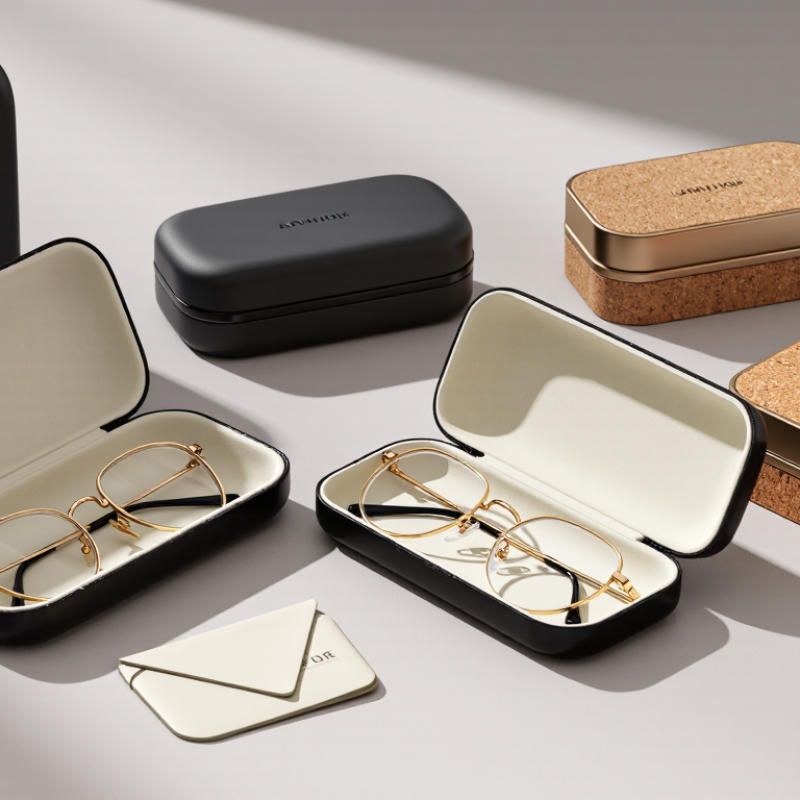
China Best Glasses Box Manufacturer for Global Buyers
Eyewear Case Basics: Protection, Fit, Materials, and Use
A useful eyewear case protects lenses from scratches, pressure, and loose objects in a bag. The shell should resist everyday bumps, while a soft lining helps prevent marks. Fit matters just as much: a frame that shifts inside the case may hit the edges or strain its hinges. Check the frame’s width, depth, and height, including any thick temples. A snug fit is good; forced closure is not. In practice, even a well-made case can feel bulky in a small handbag.
Tips: Place the glasses inside before approving a sample. Close the lid gently and check for movement, hinge pressure, and contact between lenses and lining.
Material choices involve trade-offs. A rigid plastic shell is light and easy to wipe; fabric-covered or molded options can offer a softer feel, but may need more care. The OECD’s Global Plastics Outlook (2022) reports that packaging made up about 40% of plastic waste in 2019. That figure covers packaging broadly, not eyewear cases, but it is a useful reminder to consider material use, durability, and avoidable layers together. Recycled content may help, though the finished case still needs to protect frames through repeated daily use. No material choice is perfect; test the case under realistic handling before settling on a specification.
| Topic | Key Details | Practical Guidance for Buyers |
|---|---|---|
| Primary purpose | An eyewear case helps reduce scratches, dust, and impact damage during storage and everyday transport. | Choose protection according to the expected use, such as a handbag, desk, retail display, or travel bag. A case cannot guarantee protection from severe impact or crushing. |
| Fit and internal space | Frame width, lens height, temple shape, and folded thickness all affect fit. Thick rims, oversized lenses, and curved temples may need more room. | Measure the folded glasses and compare them with the case’s usable interior dimensions. Allow clearance so the frame is not forced against the lining or closure. |
| Hard-shell construction | Rigid cases commonly use a formed shell, often covered with fabric or synthetic material, and a soft interior lining. | Consider a hard shell when the case may be compressed in a bag. Check shell rigidity, edge finishing, hinge movement, and whether the lid closes securely. |
| Soft-case construction | Soft pouches are often made from woven fabric, microfiber, or other flexible textiles. They are lightweight and take up little space. | A pouch can help limit surface scratches and dust, but generally offers less crush protection than a rigid case. Confirm that seams and closures suit the intended use. |
| Common outer materials | Options include textile coverings, synthetic leather, genuine leather, and molded plastics. Surface appearance, flexibility, weight, and care needs vary by material and construction. | Ask for the exact material composition and finish. Evaluate samples for odor, color consistency, surface wear, stitching, and cleaning requirements. |
| Lining and lens contact | A soft, clean lining can help reduce abrasion during normal storage. Dust or grit trapped inside can still scratch lenses. | Check that the lining is securely attached and free of loose fibers. Keep the case clean, and avoid placing dirty or damp glasses inside for long periods. |
| Closure and hardware | Closures may include a spring hinge, zipper, snap, or drawstring, depending on the case design. | Open and close sample units repeatedly. Check for smooth operation, secure closure, exposed sharp edges, and hardware that could contact the eyewear. |
| Cleaning and care | Care methods depend on the materials. Some fabrics can be spot-cleaned, while leather and coated surfaces may require material-specific care. | Request care instructions for the selected construction. Avoid assuming that a case is washable or water-resistant unless this has been confirmed. |
| Quality checks | Useful checks include dimensional consistency, clean stitching, stable lining, reliable closure, and an absence of visible defects. | Approve a production sample against agreed specifications. Inspect fit with representative frame shapes and document acceptable tolerances before placing an order. |
| Packaging and transport | Case shape, surface finish, and closure can be affected by handling and storage during transport. | Confirm packing method, carton quantity, and labeling requirements. Test the packed product for the handling conditions expected in the supply chain. |
| Selection checklist | The best choice balances frame fit, protection level, weight, material, closure, appearance, and target retail or promotional use. | Share the intended frame dimensions, quantity, material preferences, required packaging, destination market, and any applicable product or labeling requirements when requesting a quotation. |
A molded hard shell resists crushing better. A padded lining can help limit scratches and collect dust.
Check that the fabric feels smooth and does not shed fibers. Loose fibers can cling to lenses. Small details matter.
Open and close samples repeatedly. Look for looseness, sharp edges, and uneven gaps. A misaligned hinge may wear the shell.
Measure the frames’ widest points, temple length, and folded height. Leave enough room for easy insertion, especially around thick temples.
No. A case can protect eyewear during storage, but it cannot verify lens performance or frame compliance.
Confirm reports match the shipped product. Compare lens details, markings, frame dimensions, and materials. A revised hinge or lens may matter.
Request a sample made with the planned materials. Ask how production batches are checked for dimensions, hinges, finishes, and stitching. One sample is not enough.
Include sample approval, material availability, packing, and shipping windows. Check carton dimensions and shipping documents before dispatch. Schedules can slip.
Not necessarily. Extra room may fit more frame styles, but the case can feel bulky in a small bag. I would test several frames before approving a size.
A well-designed Glasses Box protects eyewear from scratches, dust, pressure, and everyday impact while providing a secure, comfortable fit. Its shape and interior dimensions should suit the intended frames without squeezing them or allowing excessive movement. Materials, shell strength, lining softness, and closure style all influence durability and ease of use. Careful construction around hinges and other stress points helps the case remain reliable through repeated opening and closing.
For export shipments, packaging should be evaluated for handling risks, with ISTA 3A testing covering parcel shipments up to 70 kg. Eyewear products should also be developed with relevant standards in mind, including ISO 12312-1 for sunglasses and ISO 12870 for frames. When selecting a China manufacturer, buyers can assess documented quality-control procedures, production capacity, realistic lead times, packaging capabilities, and export readiness. Clear specifications and consistent inspections help align the finished product with market needs.
