
The 2026 market for Spectacle Soft Cases is moving beyond basic protection. Global buyers now assess materials, construction, branding, packaging, and delivery reliability together. A case must survive real handling, not merely look attractive in a product photograph.
Grand View Research reported that the global eyewear market reached approximately USD 172.5 billion in 2023. Its forecast also indicates continued growth through 2030. This expansion creates wider demand for practical accessories, including lightweight storage and travel solutions. Meanwhile, the Smithers report on protective packaging highlights the importance of durability, material efficiency, and performance during distribution. These findings matter to importers selecting soft cases for optical chains, online retailers, and promotional programs.
Small details matter.
A reliable Spectacle Soft Cases supplier should provide fabric specifications, lining information, closure testing, colorfastness results, and clear sampling records. A soft case that protects acetate frames may not protect heavier metal frames equally. Zipper teeth can catch. Drawstrings can loosen. Printed logos may fade after repeated rubbing. These problems are easy to overlook during quotation reviews.
This guide evaluates leading 2026 options through a buyer’s practical lens. It considers protection, material consistency, customization, minimum order quantities, packaging, and supplier communication. Where possible, recommendations should be supported by samples and documented inspections, not promises alone. No ranking is flawless. Regional shipping conditions, climate, and consumer habits can change the final choice. Buyers should also question sustainability claims unless recycled content and relevant testing evidence are clearly supplied. The best case is not always the cheapest one. It is the one that performs consistently after production, transport, and daily use.
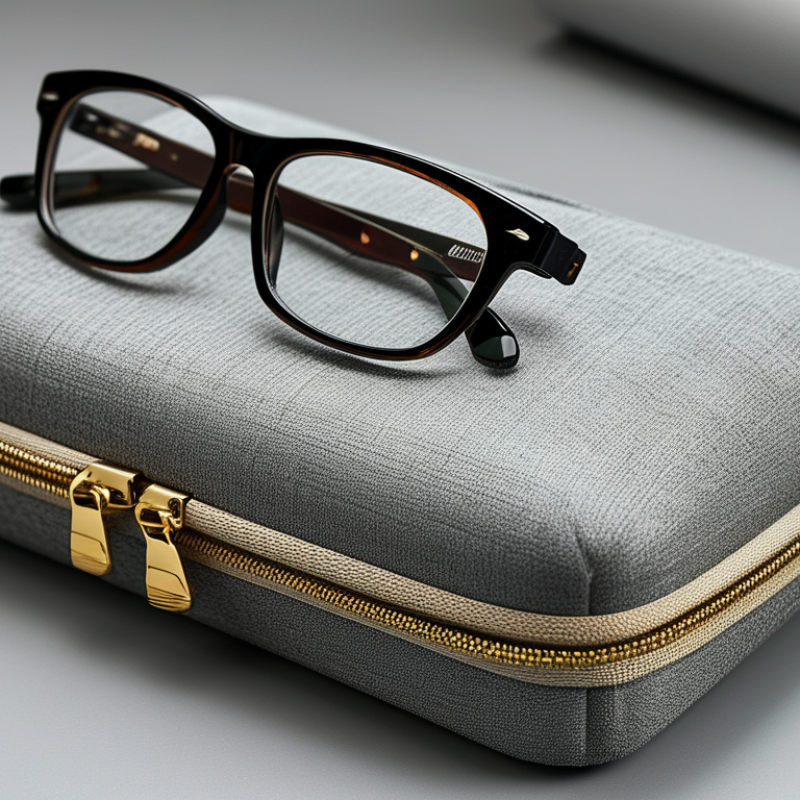
Global eyewear demand requires measurable case specifications, not vague claims. Grand View Research valued the eyewear market at about USD 183.36 billion in 2023. Its 2024–2030 analysis also forecasts continued annual growth. More frames will enter varied channels, including optical stores, travel retail, and online fulfillment. The WHO World Report on Vision identifies at least 2.2 billion people with near or distance vision impairment. That scale increases the need for dependable storage.
Fit must begin with the largest expected frame. For a 145-millimeter frame, specify at least 155 millimeters of internal length. Allow 8 to 12 millimeters of side clearance. A 50-millimeter lens height needs roughly 58 millimeters of internal height.
Lens clearance should remain 3 to 5 millimeters above the front surface. Soft padding must not press directly against coated lenses. Small details matter.
Capacity data should state usable space, not external dimensions. A single case may hold one standard frame, while a double case needs separate compartments. For two frames, target approximately 165 × 75 × 55 millimeters internally. Measure folded temples, bridge width, and hinge thickness during sampling.
A perfectly universal case is still a convenient fiction. Some oversized frames will fail. Document those exceptions honestly, then revise the pattern, foam density, and closure tension before mass production.
For 2026 spectacle soft cases, material density affects protection, weight, and shipping efficiency. EVA sheets commonly measure 0.90–0.98 g/cm³. They feel firm and resist compression. PU foam usually measures 0.05–0.30 g/cm³, offering lighter cushioning but weaker shape retention. Neoprene foam often falls near 0.10–0.30 g/cm³. Its rubbery surface helps absorb daily impacts. Recycled polyester fabrics are usually specified by fabric weight, not density. Common shells range from 180–320 g/m².
Abrasion data needs careful comparison. ISO 12947 Martindale testing often shows 30,000–80,000 cycles for recycled polyester shell fabrics. Neoprene surfaces may reach 20,000–50,000 cycles. PU-coated fabrics can exceed 50,000 cycles, but coating failure may appear earlier at folds. EVA is better judged under ISO 4649 or ASTM D4060, where wear loss can range widely, often around 100–300 mg per 1,000 cycles. These figures are screening references, not promises. Test pressure, abrasive wheel, coating thickness, and seam design change results. Textile Exchange’s Materials Market Report 2024 also reports strong growth in recycled polyester use, yet recycled content does not automatically mean higher abrasion resistance.
Tips: Ask suppliers for density, GSM, test method, load, and failure photos. Request samples with metal frames and lenses inside. I would test 500 opening cycles and a rough-bag simulation before approving production. One weakness remains: laboratory abrasion rarely copies real dust, sweat, and zipper friction. Procurement decisions should acknowledge that gap.
A soft spectacle case should protect lenses, frames, and hinges during ordinary distribution. Visual inspection is not enough. Buyers should request documented testing on the finished case, including its fabric, padding, zipper, and closure.
ASTM D4169 evaluates packaged products against transport hazards. The selected distribution cycle and assurance level must match the shipping route. A case packed inside a carton may need vibration, compression, and impact testing. ISO 2248 focuses on vertical free-fall drops. Testers drop the filled package from defined heights and inspect damage afterward. Drop edges, corners, and faces matter.
In practical evaluations, I check lens clearance after each drop. I also examine broken seams, crushed foam, and zipper separation. Small defects can become serious after repeated handling. Testing should use production-equivalent samples, realistic case contents, and clearly recorded conditioning. Temperature and humidity may change soft materials.
A report should identify sample quantity, drop height, orientation, package weight, and acceptance criteria. “Passed” alone is weak evidence. Neither standard predicts every warehouse or delivery condition. I have seen cases perform well in dry testing but lose structure after moisture exposure. That limitation deserves attention, not concealment. Repeating tests with revised padding can reveal whether the design is genuinely robust or merely lucky.
For 2026 spectacle soft cases, REACH screening should begin with every material layer. The 0.1% SVHC threshold applies by article, not simply by finished case weight. Check the outer fabric, foam, lining, zipper, printing, adhesive, and metal parts separately. A case may look harmless while a coating contains a listed substance above 0.1% by weight. The Candidate List changes, so buyers should verify the current version before approving production.
Tips: Request signed material declarations from each supplier. Ask for test reports linked to specific batches. Use risk-based laboratory testing for PVC coatings, synthetic leather, dyes, and adhesives. Confirm whether the laboratory tested the individual component or only the complete case. That difference matters.
In practical sourcing work, paperwork often appears stronger than the evidence behind it. One supplier statement may cover an old formula, not the current one. Keep purchase orders, specifications, declarations, and laboratory reports together. If an SVHC exceeds 0.1%, request the substance name and safe-use information, then check applicable communication and notification duties for the EU market. Do not treat “REACH compliant” as a complete explanation. Ask what was tested, when, and against which Candidate List. Some checks may still be incomplete. That should be recorded, not hidden.
2026 Top Spectacle Soft Cases for Global Buyers
Evaluate Global Suppliers by MOQ, Lead Time, QC Rate, and Landed Cost
Global buyers should assess spectacle soft cases beyond fabric, color, and stitching. In sourcing projects, I compare MOQ, production timing, QC records, and delivered cost together. A low MOQ can help smaller retailers test demand without holding excessive inventory. However, low-volume orders may carry higher unit prices, setup fees, or weaker customization options. Ask whether the stated MOQ applies per design, color, or total order.
Lead time needs careful checking. Request separate estimates for sampling, material preparation, production, inspection, and dispatch. A supplier promising ten days may exclude packaging or export handling. That detail can disrupt a seasonal launch. It happens. QC rate also needs evidence, not attractive percentages on a quotation. Request recent inspection records, defect classifications, and photos of zipper alignment, lining, odor, and edge finishing. A 98% pass rate means little without a defined inspection standard and sample size.
Landed cost gives the clearest comparison. Include unit price, tooling, labels, cartons, freight, duties, payment charges, and independent inspection. I once selected the cheapest quotation and later found that bulky cartons increased freight sharply. The lesson was uncomfortable. Spreadsheet savings are not always real savings. Buyers should compare suppliers using identical specifications, delivery terms, order quantities, and inspection rules. Then request a pre-production sample and test several cases under normal retail handling.
: Use at least 155 millimeters internally. Add 8 to 12 millimeters of side clearance. Tight cases may damage hinges.
A 50-millimeter lens height needs about 58 millimeters of internal height. Keep 3 to 5 millimeters above the lens surface. Padding should not press coated lenses.
Target about 165 × 75 × 55 millimeters internally. Separate compartments help prevent frame contact. Measure folded temples, bridges, and hinge thickness.
No. A truly universal case is convenient fiction. Oversized frames may still fail. Record exclusions honestly and adjust the pattern.
Compare density, fabric weight, abrasion resistance, and compression recovery. EVA feels firmer, while PU foam is lighter. Neoprene offers a rubbery cushioning surface.
Request density for foam, GSM for fabrics, test methods, applied loads, and failure photographs. Samples matter more than attractive data sheets.
Test finished cases with realistic frames and lenses inside. Include vibration, compression, impacts, and vertical drops. Inspect every edge, corner, and face.
It should state sample quantity, drop height, orientation, package weight, conditioning, and acceptance criteria. “Passed” alone proves very little.
Run about 500 opening cycles. Simulate dust, sweat, rough bags, and zipper friction. Laboratory abrasion does not fully copy daily handling.
Moisture may weaken structure after dry testing. Closure tension may also change. I would repeat tests after revisions, because one successful sample may be luck.
For global buyers, selecting the right Spectacle Soft Cases in 2026 requires a structured evaluation of fit, protection, compliance, and supply performance. Start by defining case requirements from actual frame dimensions, lens clearance, hinge space, and capacity targets. Compare EVA, PU, neoprene, and recycled fabrics using measurable factors such as material density, flexibility, tear resistance, and abrasion performance. These details help buyers balance lightweight design with dependable protection during storage and transport.
Product validation should include ASTM D4169 distribution testing and ISO 2248 drop testing to assess durability under realistic shipping impacts. Buyers should also review material documentation to confirm REACH compliance, including screening for substances of very high concern above the 0.1% threshold where applicable. Finally, supplier selection should consider MOQ, production lead time, quality-control rates, communication efficiency, and total landed cost. A data-driven comparison can reduce purchasing risk while supporting consistent quality, responsible material choices, and scalable international sourcing.
